
2026 · All levels
How Long Does It Take to Learn Japanese Language? (Honest Timeline)
Many people become interested in Japanese because of anime, travel, food, business opportunities, or Japanese culture. However, after the initial excitement, one major question usually appears: “How long does it actually take to learn Japanese?”
The honest answer is not as simple as “6 months” or “1 year”. Japanese is considered one of the more challenging languages for English speakers because it involves completely different grammar structures, writing systems, and communication patterns.
At the same time, Japanese is not impossible to learn. Many learners study Japanese in Singapore through proper guidance and realistic expectations.
At Bunka Language School, we regularly work with students who begin with zero Japanese knowledge and gradually develop practical communication skills through structured lessons. The key is understanding what progress actually looks like. Japanese fluency is not a single moment. It happens in stages, and every stage requires different skills.
Key Takeaways
- Learning Japanese is a long-term process, but students can usually handle simple conversations within several months of consistent study.
- A structured beginner Japanese class helps learners avoid common mistakes that slow down progress later.
- Students learning Japanese in Singapore often improve faster when they combine lessons with daily exposure and speaking practice.
- Japanese fluency depends heavily on practical communication practice and realistic expectations rather than talent alone.
- Learners who study through a Japanese language class programme in Singapore usually benefit from stronger accountability, guided progression, and clearer learning structure.
Why Japanese Feels Difficult for Beginners
Japanese challenges learners because almost every aspect of the language differs from English.Unlike Spanish or French, where learners may recognise familiar alphabets and sentence structures, Japanese introduces multiple systems at once.These include:- Hiragana
- Katakana
- Kanji
- New grammar patterns
- Different cultural communication styles
- Multiple politeness levels: Japanese uses different speech styles depending on the situation, relationship, and social hierarchy, which learners must gradually understand and apply correctly.
This means learners must train themselves to process sentences differently.
At the same time, Japanese communication also relies heavily on context. Native speakers frequently omit subjects and information that are assumed to be understood. This can initially feel confusing for learners who are used to direct English communication patterns.
The Three Writing Systems Explained
One reason Japanese takes longer to learn compared to some languages is the writing system.Before students can comfortably read basic Japanese material, they usually need familiarity with three different scripts.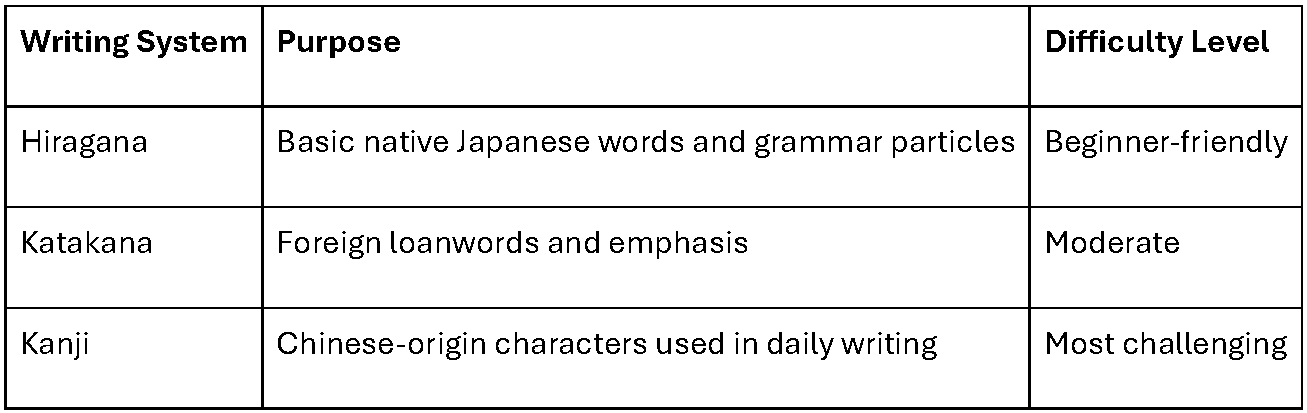
Many learners can memorise hiragana relatively quickly, while katakana is typically introduced later as students progress through their studies. Kanji, however, becomes a long-term learning process that continues even at advanced levels.
This is why learners should not judge their progress too harshly early on. Japanese requires patience because several skills develop simultaneously.
Honest Japanese Learning Timeline
 Source: Envato
Every learner progresses differently, but there are realistic patterns that most students experience.
The timeline below assumes regular study and attendance in a Japanese language class in Singapore.
First 1 to 3 Months: Survival Japanese Stage
The first stage focuses heavily on foundations.Students typically learn:- Basic greetings
- Self-introductions
- Hiragana
- Essential grammar structures
- Numbers and time expressions
- Basic sentence construction
- Simple listening exercises
- Introduce themselves
- Ask simple questions
- Order food
- Understand very basic classroom Japanese
Common Beginner Frustrations
“I Keep Forgetting Vocabulary”
This is normal. Memory retention improves through repeated exposure, not one-time memorisation.“I Understand But Cannot Speak”
Passive understanding develops faster than speaking confidence. Learners need active conversation practice to bridge the gap.“Japanese Grammar Feels Backwards”
Many learners initially translate directly from English, which creates confusion. Over time, students begin thinking more naturally in Japanese patterns. This stage is where structured guidance becomes especially valuable. A beginner Japanese class provides repetition, correction, and speaking opportunities that many self-learners struggle to maintain alone.Around 4 Months: Functional Beginner Stage
After about four months of consistent learning, many students notice significant improvement.At this stage, learners often begin:- Understanding simple conversations
- Reading short passages
- Forming longer sentences
- Asking follow-up questions
- Participating in basic discussions
- Listening with less dependence on subtitles
Why Many Students Plateau Around 6 Months
Progress is often highly visible during the beginner stage. After six months, improvement becomes less obvious, which is why many learners feel they have plateaued. Students may suddenly realise:- Native speakers still talk too quickly
- Reading remains difficult
- Vocabulary gaps are large
- Natural conversations are unpredictable
How to Push Past the Plateau
Students who continue progressing usually focus on:- Daily listening exposure
- Speaking without fear of mistakes
- Consistent revision
- Reading simple Japanese regularly
- Using Japanese actively instead of passively consuming content
1 Year of Learning Japanese: Intermediate Development
 Source: Envato
After around one year of regular lessons and revision, learners usually become noticeably more independent.
Students may be able to:
- Hold longer conversations
- Describe experiences and opinions
- Understand slower native speech
- Read basic articles
- Navigate Japan more confidently
- Communicate in everyday scenarios
Ironically, this awareness is often a sign of genuine progress.
What Actually Determines How Fast You Learn Japanese?
Many learners compare themselves unfairly to others online. In reality, several factors strongly affect learning speed.Study Frequency Matters More Than Study Intensity
One of the biggest mistakes learners make is studying heavily once a week instead of consistently throughout the week. For example:- 20 minutes daily is often better than 4 hours once weekly
- Daily listening improves retention significantly
- Short but regular exposure helps long-term memory formation
Speaking Practice Accelerates Learning
Some learners spend years memorising grammar without becoming conversational. This happens because language is a communication skill, not just an academic subject. Students improve faster when they regularly use Japanese in conversations, respond spontaneously, learn from mistakes, and engage with the language in realistic situations. This is why students studying through a Japanese language class programme in Singapore often improve speaking confidence faster than purely self-taught learners.Motivation Alone Is Not Enough
Many students begin learning Japanese with strong enthusiasm but eventually lose momentum. Long-term learners usually rely more on systems than motivation. Examples include:- Fixed study schedules
- Weekly classes
- Vocabulary review habits
- Daily listening routines
- Accountability through instructors or classmates
Self-Study vs Structured Classes
Many learners wonder whether they should self-study or join formal lessons. The truth is that both approaches can work, but they offer different advantages.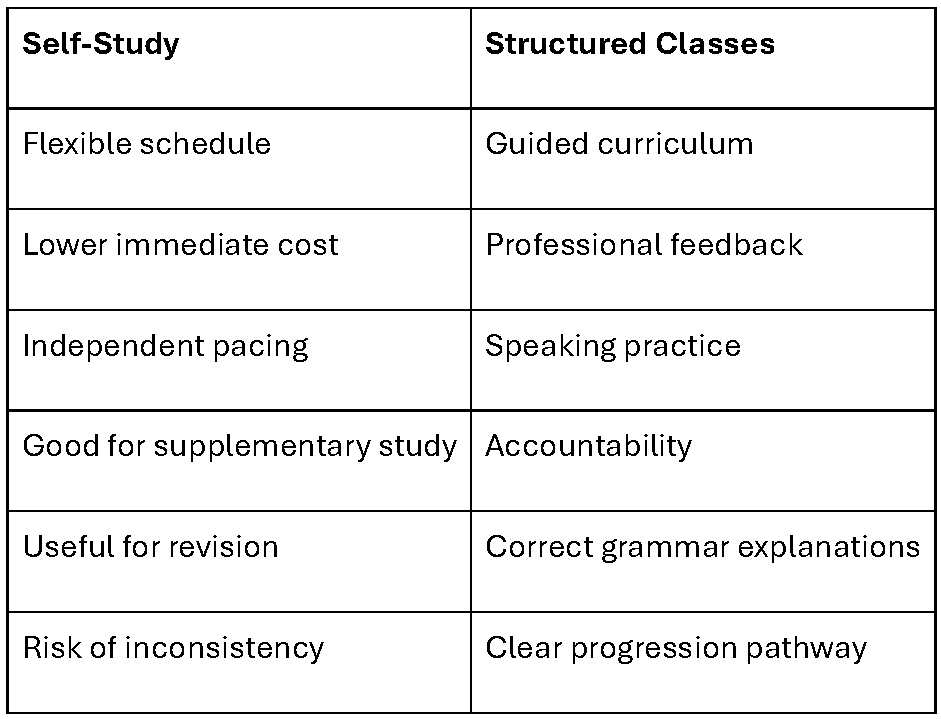
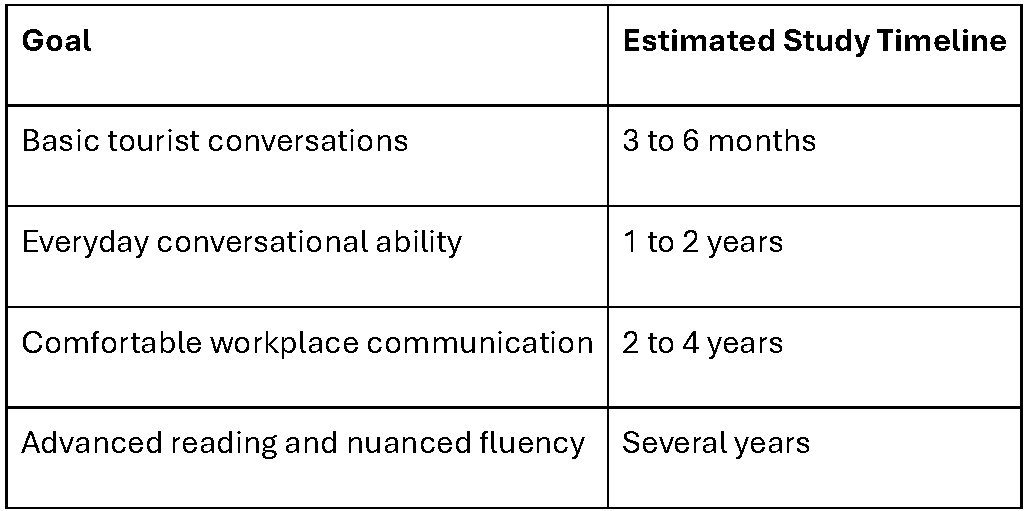
Many learners search for exact numbers, but fluency varies depending on goals.
Someone who wants to travel comfortably requires far less Japanese than someone aiming for professional-level fluency.
Here is a more realistic breakdown:
Why Learning Japanese in Singapore Has Advantages
Students learning Japanese in Singapore benefit from access to structured language schools, flexible schedules, and supportive learning communities.Singapore also has:- Strong adult learning culture
- Convenient class availability
- Multilingual learners who often adapt well to language study
- Exposure to Japanese businesses and culture
- Communities of fellow learners